MSU Library Associate Jeffrey Lawson Has Spent Years Organizing SLT’s 90 Year History
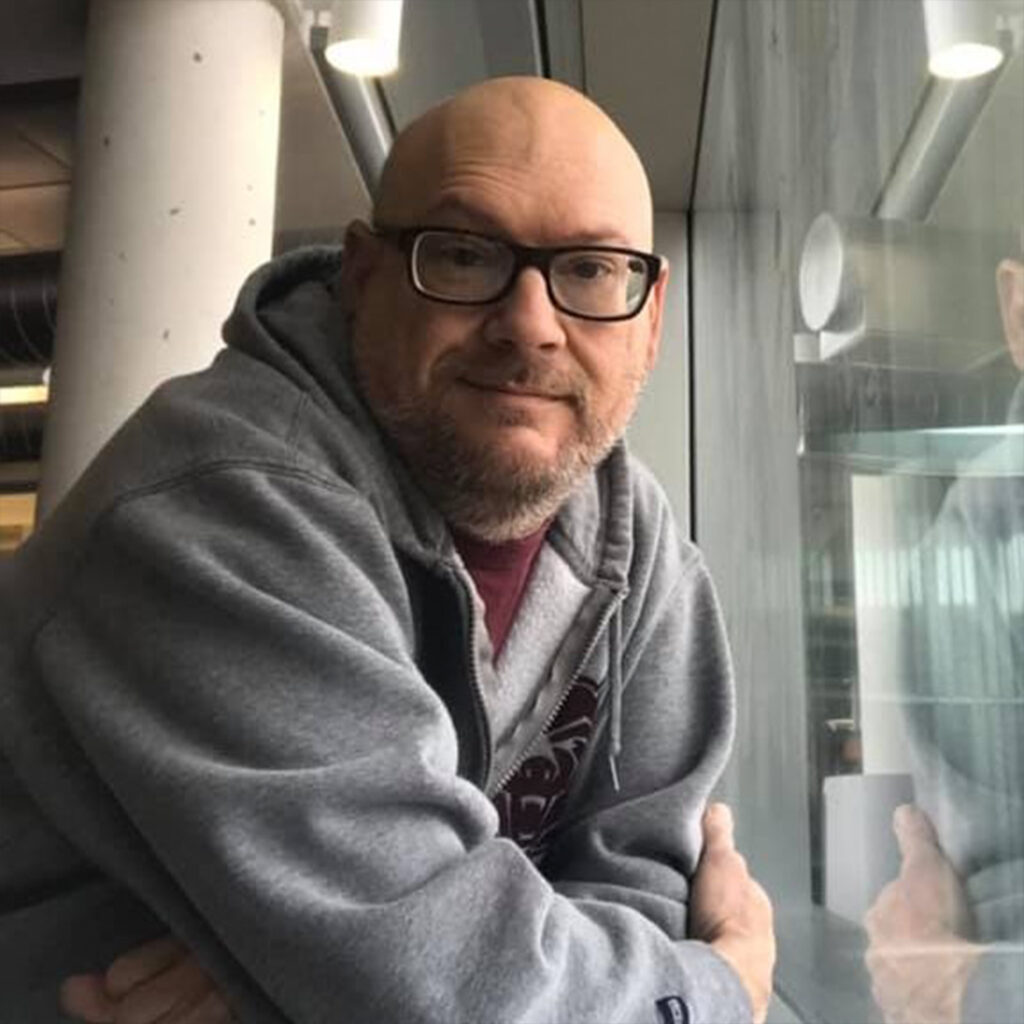
Performance talents, social connections, and self-confidence are all valuable skills that Springfield Little Theatre alumni build, but the most cherished takeaway for participants is often memories made. Missouri State University Library Associate Jeffrey Lawson shepherds the theatre’s records across its 90-year history. He has spent years cataloging and archiving photos, documents, and mementos that help Springfieldians reconnect and remember SLT’s remarkable story.
Lawson began his career at Meyer Library in the Circulation department nearly 25 years ago. After gaining experience as Shelving Supervisor then Overdue and Billings Supervisor, management tapped him to assist in Special Collections and Archives. A self-proclaimed SLT “groupie”, Lawson has been attending performances since he began watching his theatrical friends in high school. His passionate support proved to be useful for the project.
“They knew that I was familiar with the [Springfield Little Theatre] organization and with a lot of the people that worked and performed down there,” he said. “They thought, well, Jeffrey would probably be the best person to help process this collection because I could probably look at a picture and know what show it was as opposed to the other people up here who aren’t as familiar with theatre. About five or six years ago I began coming up here working with that collection and then working with other collections and it just kind of snowballed.”
Lawson has worked fulltime in Special Collections and Archives since 2020. He has been continually cataloguing multiple projects, including mountains of SLT related content. He carefully handles all the materials serving as a historical detective to uncover its significance. Not every item is immediately identifiable.
“A lot of it you have to go through maybe two or three times. You can’t just go through a box and start throwing stuff away because you never know,” Lawson cautioned. “That second or third time you go through a box or a folder may be the time that you find the treasure that you’re looking for, or something that’s very important to the collection. I just like to go through things a couple of times before I end up discarding anything because I don’t want to throw out anything that’s important.”
For every item that is entered into the archive, Lawson tries to uncover as much accompanying information as he can. Rather than just describe what’s visible, he hopes to file as many details as he can.
“Sometimes you’ll pull out a photograph that has no date, you don’t know when it was taken. Part of my job is as I put these online, I like to find out who is in the photo, when it was taken, why it was taken, how it was used, where it was taken, and sometimes you get none of that.” Lawson admitted to occasionally running into frustrations when a piece eludes him. “You just have to put ‘undated’ on something. I hate doing that. I like to know exactly when and where something was taken and who is in it. There’s a mystery in every box, trust me.”
One of Lawson’s most pressing goals is digitizing the SLT archives. He hopes to eventually make most of the collection searchable for researchers to easily navigate. As SLT alumni follow their careers and passions across the globe, he would like for anyone with a tie to the theatre to be able to search for cherished memories.
“We have a very large digital collection of items that we have online,” Lawson explained. “I would really like to have a lot of this [SLT collection] online so that people can access it from home and not have to come into the library. In the long-range plan, that is the goal. We can’t digitize everything, but I would love to have a really good selection of programs, historical items, posters, photographs, online for the public to look at.”
Lawson’s efforts have already been utilized by historian Kara DeBacker for a book about SLT’s home, the Landers Theatre. Lawson and DeBacker collaborated on researching both the organization and building history.
“I would just bring out box after box to Kara,” Lawson recalled. “She is such an experienced researcher. She really knows what she’s doing, and she didn’t need a lot of guidance from me. Basically, I just gave her a box and brought it out there and let her go through it. She took from it what she needed.”
Since DeBacker began that project five years ago, Lawson has made major headway in organizing the collection. He says that they have many photos, but also other interesting items like posters, photos, and even paperwork like forms filed to acquire rights to a show. He has prioritized making the documents easily searchable to more casual researchers. Many users are looking for connections to shows they’ve been involved with in the past, or even past generations in their family who may have performed.
“What we try to do is figure out when someone comes in to use this collection; how are they going to use it? What kind of things are they going to be looking for? So, you try to break things up and organize the materials in a way that is going to make sense to someone from the outside coming in to look at it,” he explained. “I figure most people who come in that want to look at Little Theatre are probably going to be looking for things that either they were in or that their parents were in or that their kids may have been in. We have a lot of people that come in for MSU theatre and dance who come in and say, ‘My mom was in this play back in 1968. We don’t have any pictures of it. Do you have any pictures of it?’ And yeah, we do. That’s really fun to be able to pull up a slide from 50 years ago and show somebody a slide of a picture of their mom that they’ve never seen.”
Lawson has uncovered some surprises during the project including original posters for a concert at Landers Theatre by Family Tree in 1972. The band would later be renamed The Ozark Mountain Daredevils. He has also poured over records of big-name stars coming for guest performances including Betty Buckley in OLIVER! and Patrice Munsel in THE SOUND OF MUSIC. Even the smallest details can be an entertaining glimpse into the past.
“Seeing all those photos like of the receptions that they had at the Lamplighter [Inn] from when Patrice Munsel came in, things like that are just great,” Lawson smiled. “I love reading the board minutes from the early years, like the 60s and 70s. It’s fun to see what kind of pie Donna Crosby was going to serve at the meeting. Things like that are just hilarious to read.”
As a whole, the collection is a humbling reminder of the enduring power of SLT volunteers. As a community organization, the level of talent and dedication is remarkable across the decades and only continues to grow.
“It’s interesting to see how a relatively small group of people built something,” he marveled. “You know when you go back and you look at things from the 50s and 60s and even the 70s, there’s just a small group of people puttin’ on a show. They may have designed the program themselves back in the early days. But now, it’s such a huge thing with sponsors and underwriters. It’s amazing how much it’s grown.”
In addition to the SLT collection, Lawson oversees the history of many Springfield organizations through the Special Collections and Archives including the Frisco Railroad, OLGA LGBT, a local labor union, and the Ozark Jewish archives. Springfieldians can rest easy with their records in Lawson’s caring hands. He is just as invested in their preservation as the researchers he serves.
“I feel lucky to get to handle all of this stuff and go through it and look at it and preserve it. I’m the lucky one.”
Read more about Springfield Little Theatre’s history in The Landers: Biography of a Theater.
-
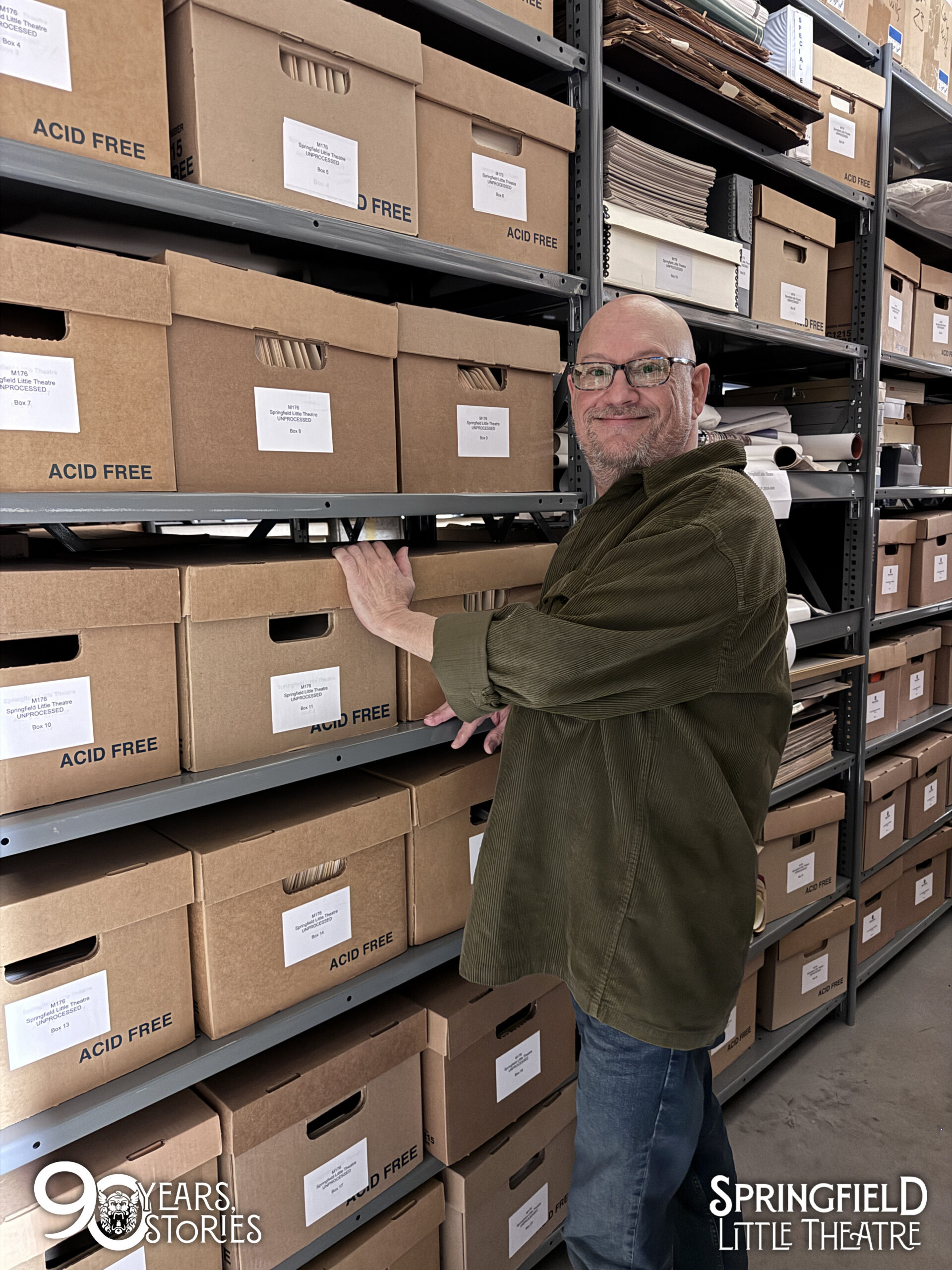
- Jeffrey Lawson in the “stacks” with Springfield Little Theatre’s archives.
-
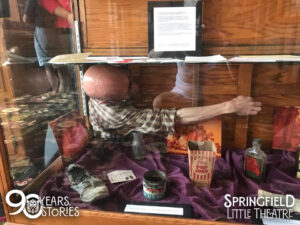
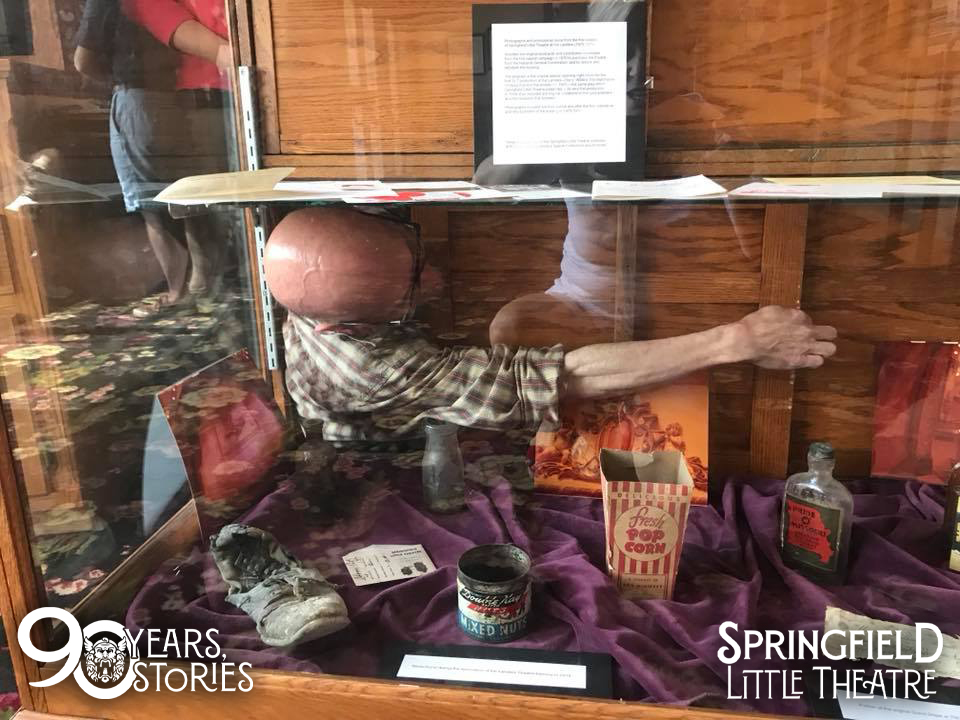
- Jeffrey Lawson prepares a special archival display at The Landers Theatre.