The Original Tile
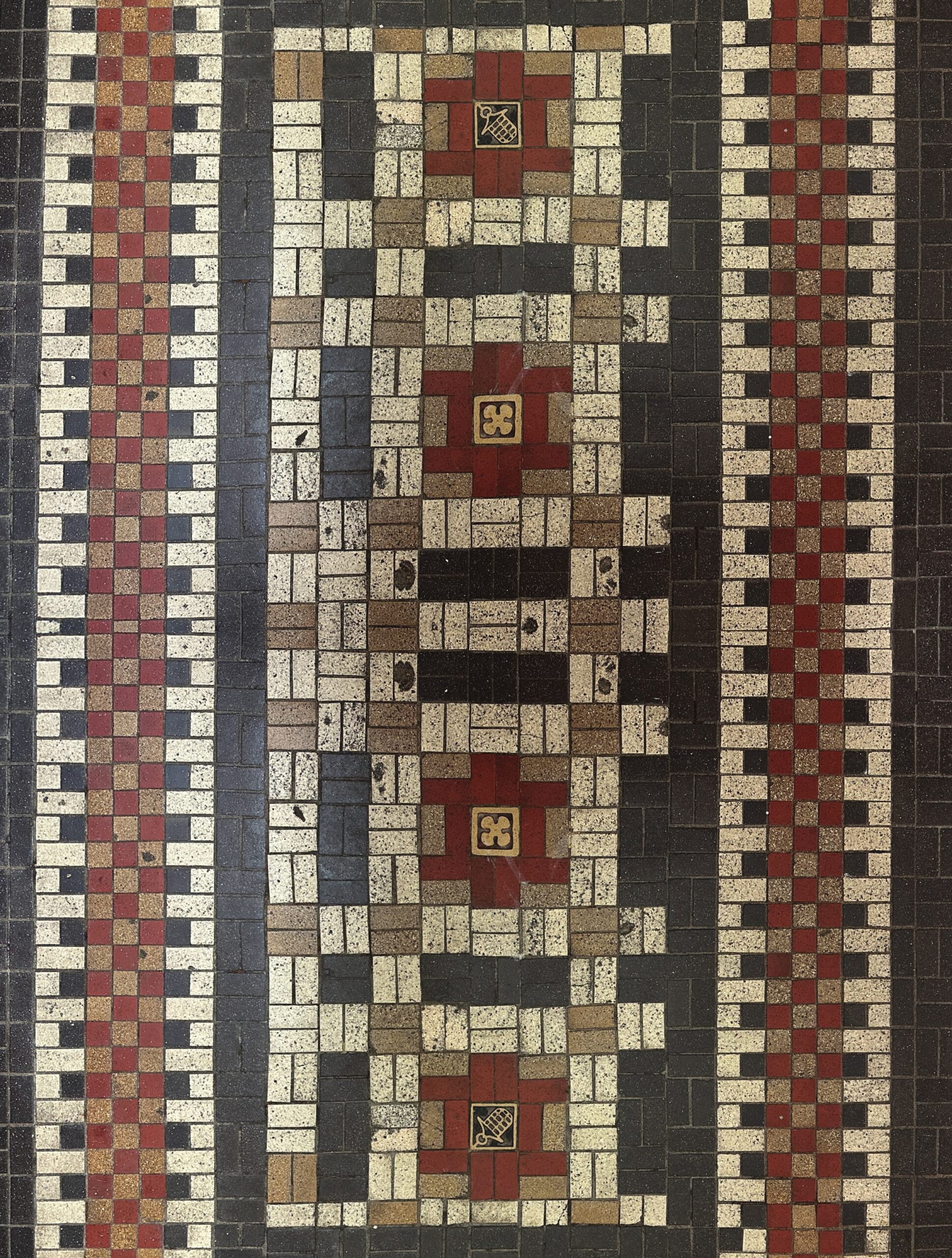
Original 1909 tile still lines the landings and upper hallways of The Landers. For many years, the second, third, and fourth floors housed businesses and apartments. Today those spaces serve as Springfield Little Theatreoffices and rehearsal space.
The Orpheum Wall
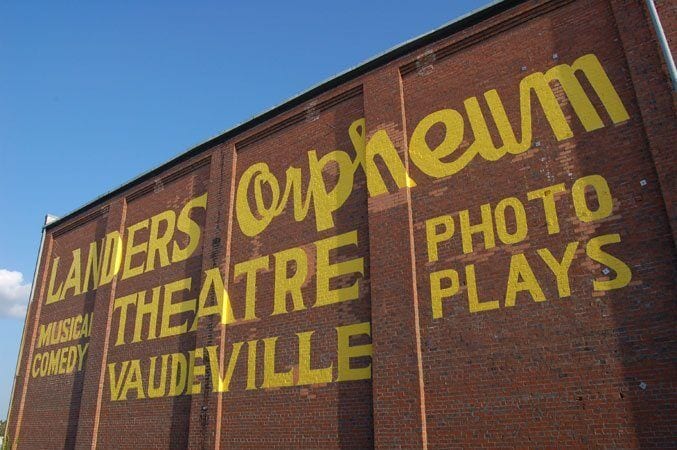
The painted “LANDERS ORPHEUM THEATRE” advertisement is still visible on the building’s exterior brick and remains part of the downtown skyline. It was once visible all the way from Commercial Street, where it welcomed traveling acts arriving by train.
The Upper Gallery
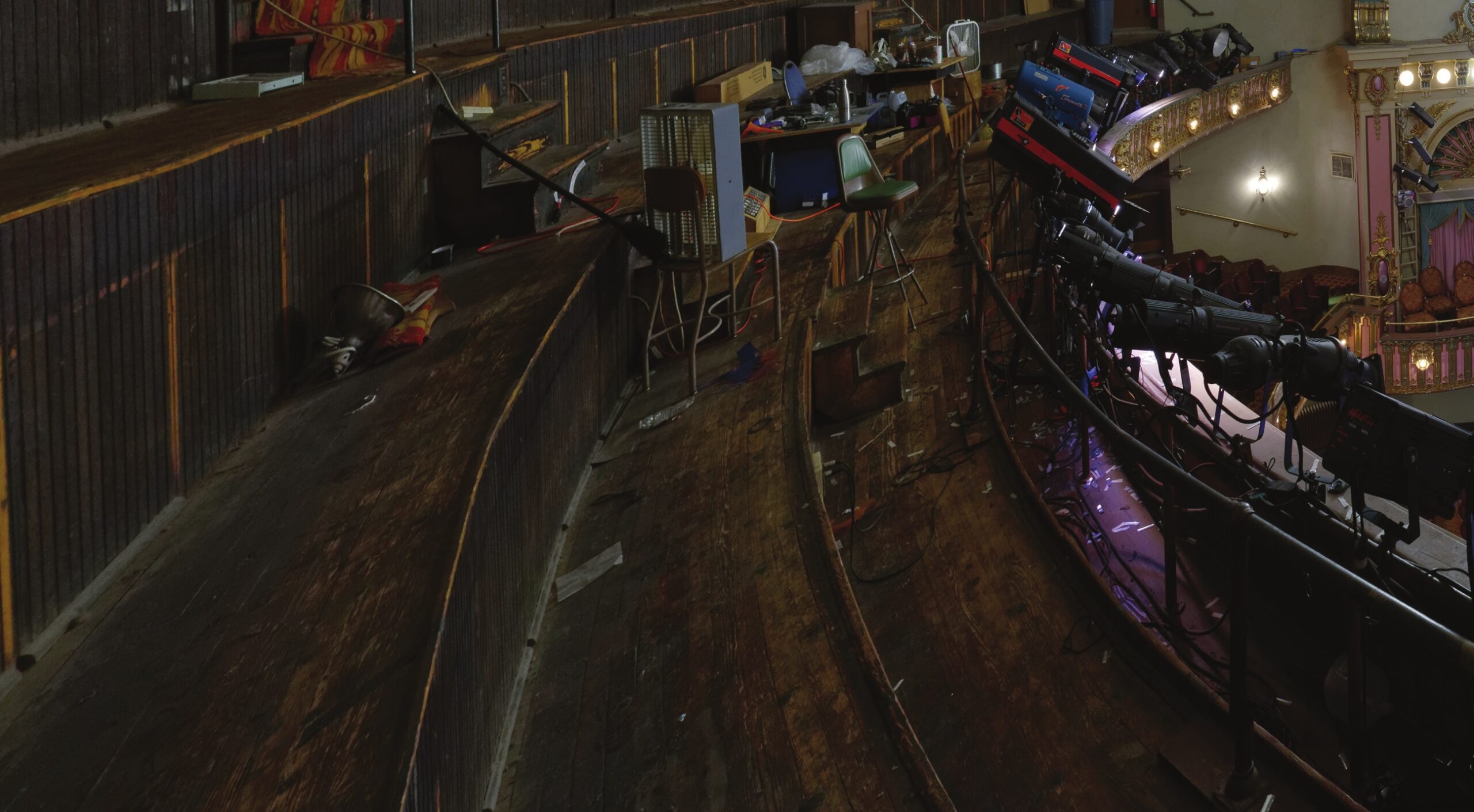
The highest balcony once served as the segregated gallery. Its surviving location remains part of the building’s history.
The Mascarons
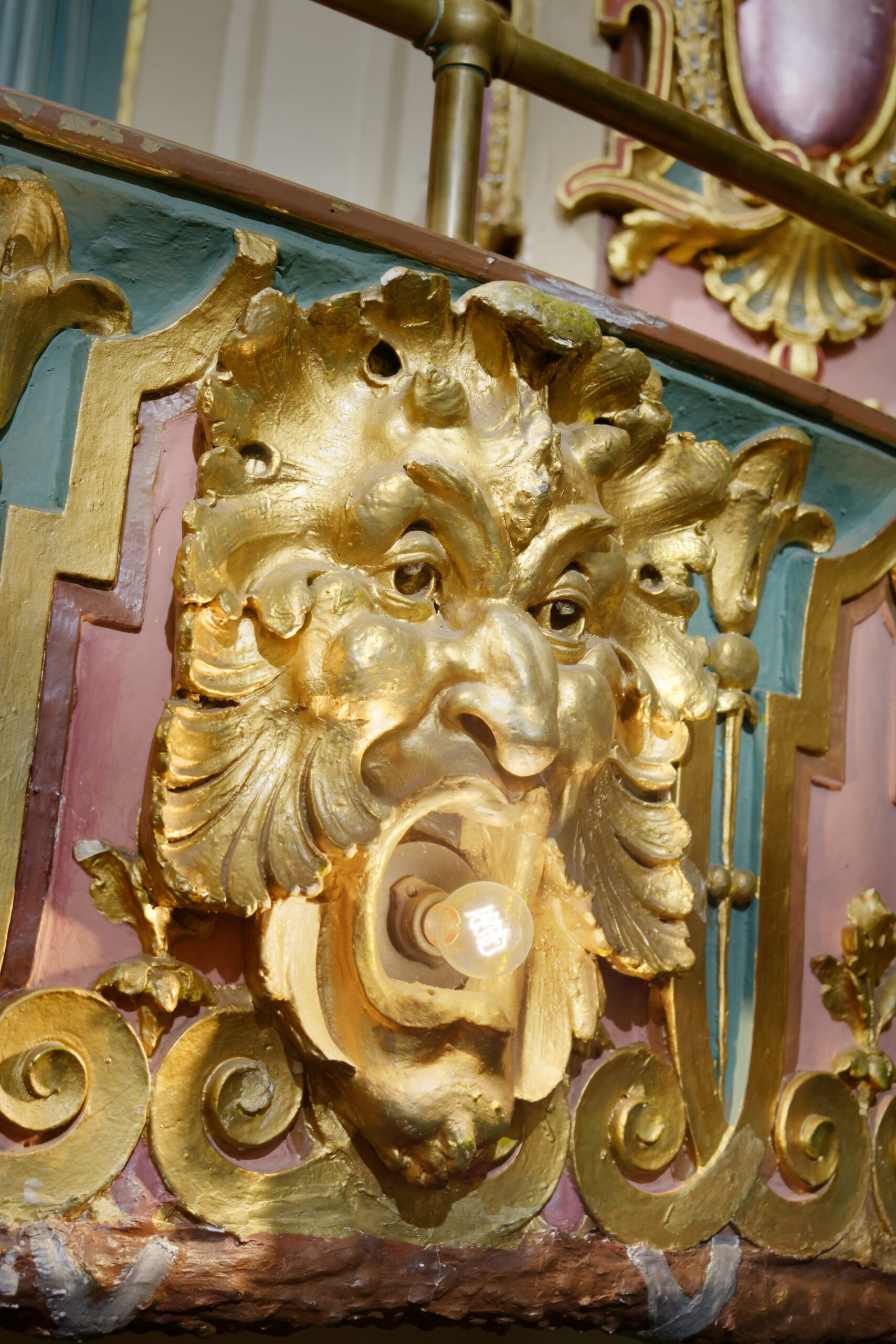
Decorative faces called mascarons watch over the auditorium from balconies, boxes, and architectural details. Most of the 32 gilded faces are also light fixtures, with a bulb glowing in each open mouth, which is a rare design. Their leafy hair, small horns, and theatrical expressions draw on the Green Man, Greek satyrs, and Dionysus, the god of theatre.
The “L”
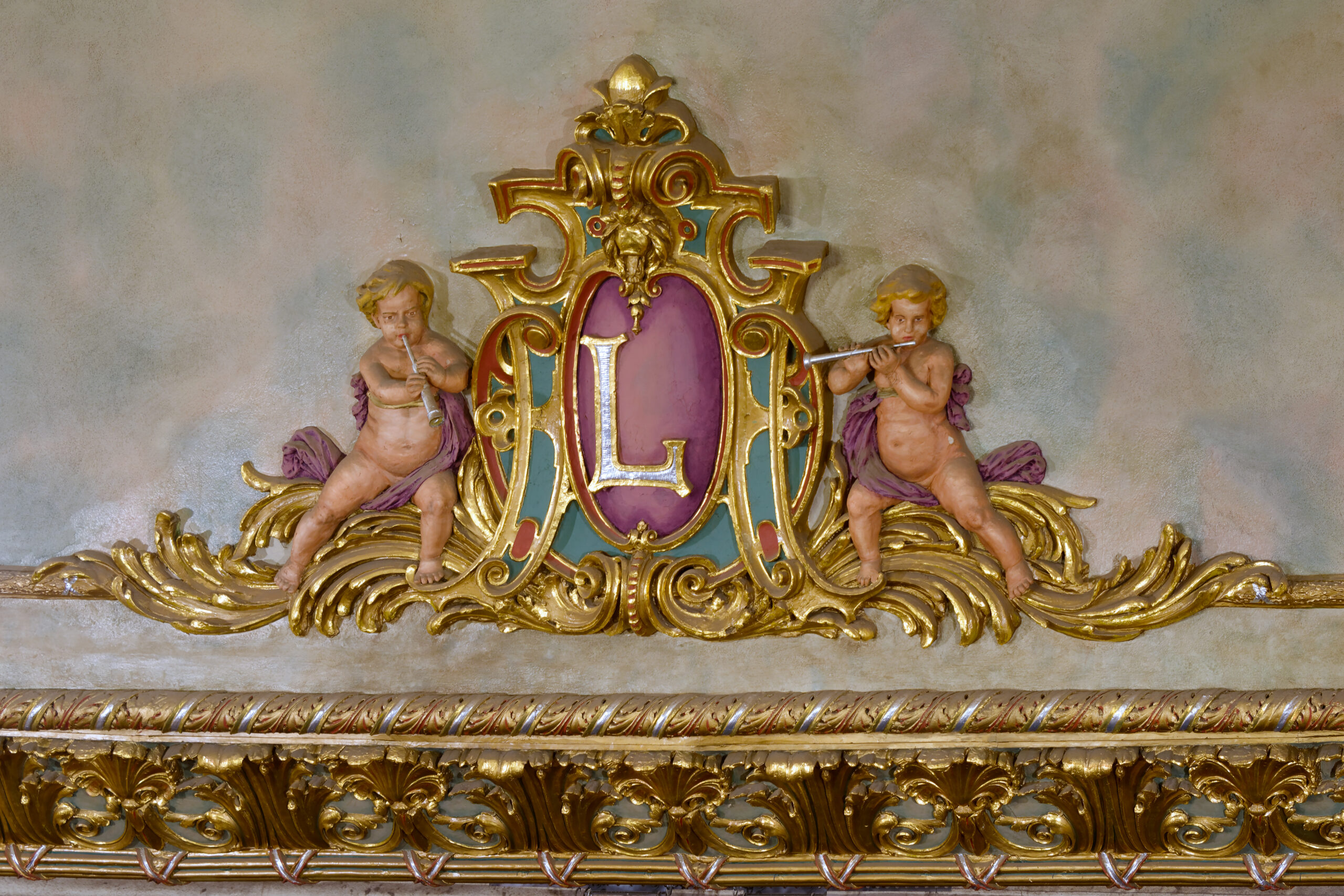
A gold crown sits over the proscenium arch, and at its center is a cartouche bearing the Landers “L.” Putti flank each side of the crown. These chubby cherub-like children come from the Italian Renaissance and stand for playfulness and pure love. According to Landers lore, the horn held by the putto on the right was a later replacement after his original instrument, likely a flute, was damaged during a repair.
Layers of Renovation
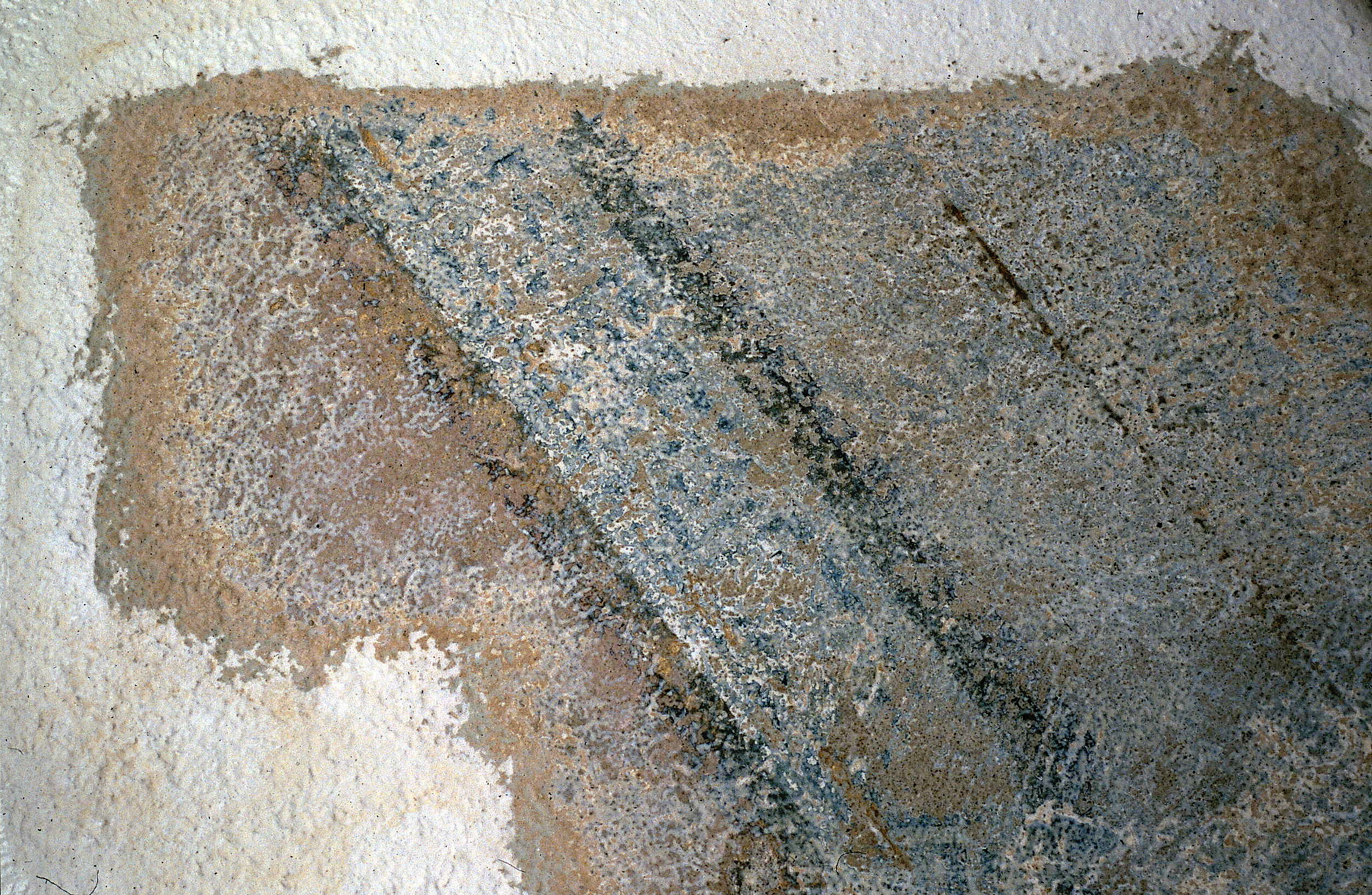
Artifacts found during restoration give glimpses of different eras at The Landers. When later layers were stripped away during an auditorium renovation, workers found a section of the original Greek key border underneath. Using that discovery as a guide, the border was hand-painted again throughout the auditorium and lobby to bring the décor back to its original design.
Lost Art
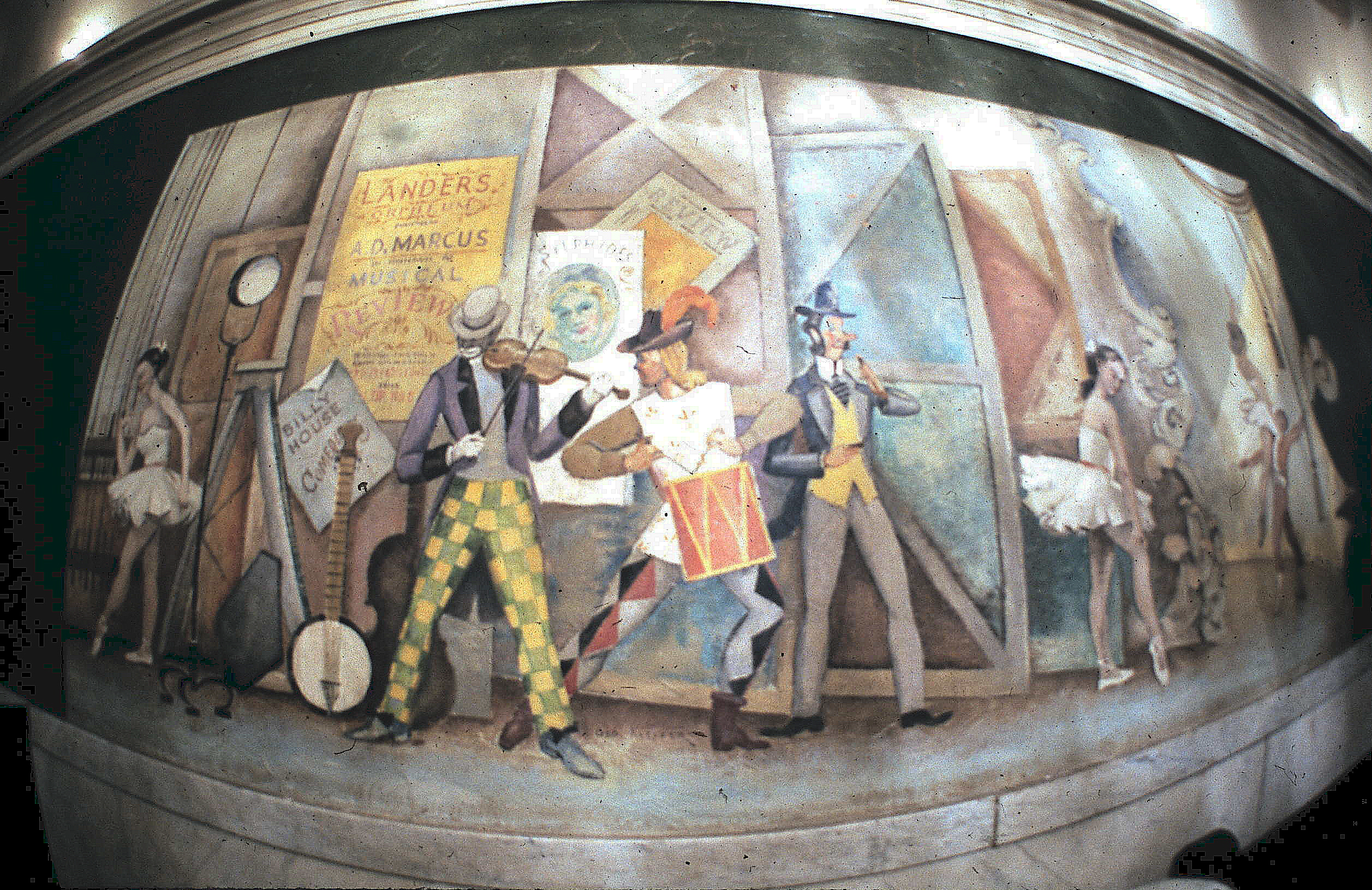
George Kieffer and Oliver Corbett both created important artwork for The Landers, and much of it is now lost. Kieffer’s murals can still be found throughout the Ozarks. In 1952 he painted one along the east wall of the old center lobby. It showed every side of theatre, from the front of house to backstage, as performers got ready for a vaudeville show. The mural was destroyed in 1982, when that wall came down to expand the east lobby.